What drives users motivation to use your product?
Every day, we wake up and do a bunch of things—go to work, tick off to-dos, maybe squeeze in a workout or meditation session.
But pause for a second. How motivated are you to do each of those things? 🤔
And more importantly—does it matter?
Yes. Absolutely.
Because what drives your behavior often determines whether something sticks... or fizzles out over time.
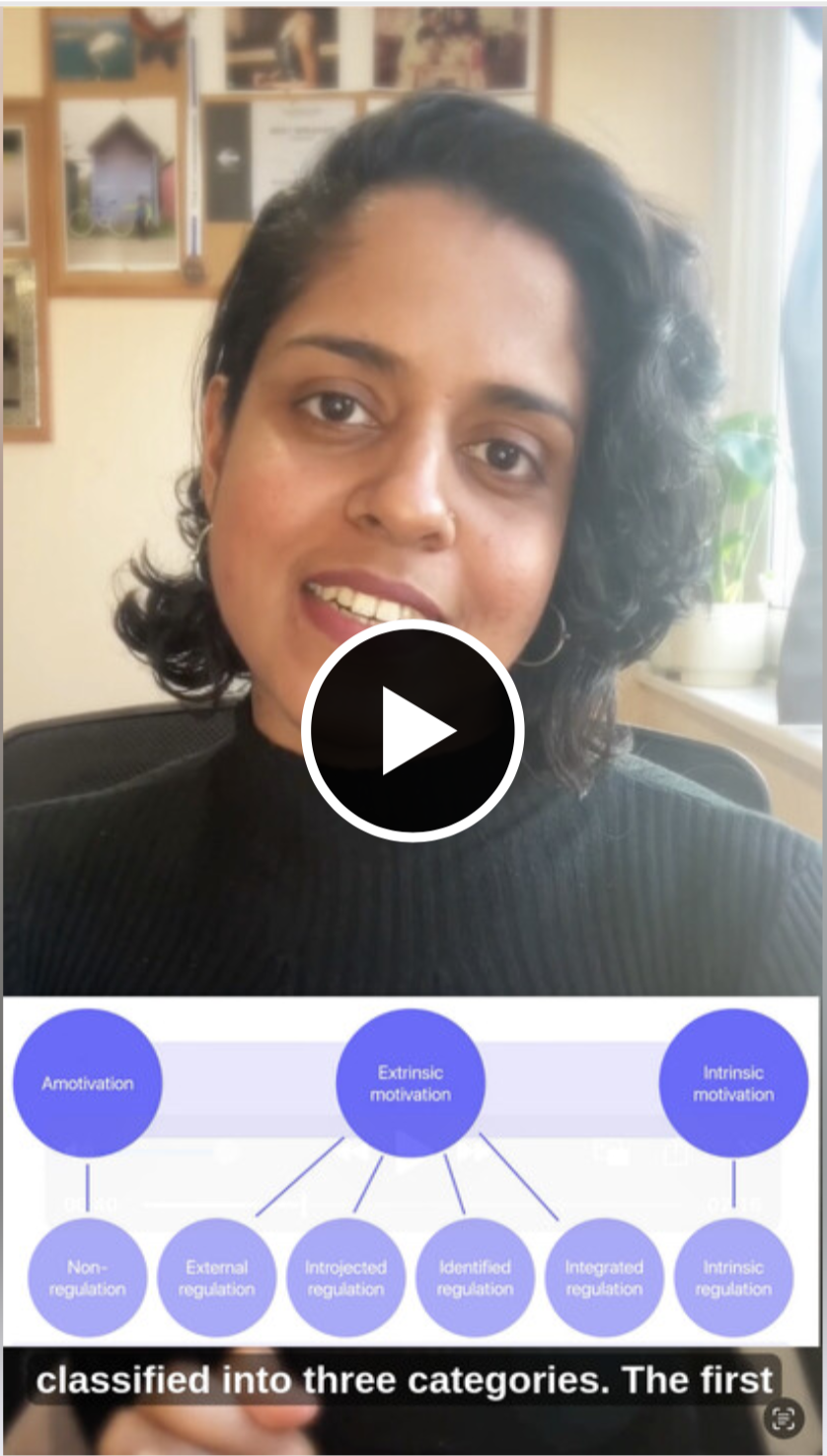
The Self-Determination Continuum 🎯 To understand motivation, psychologists often refer to the Self-Determination Continuum. It shows that motivation isn't black or white—it's a spectrum.
Here’s a quick breakdown of the different types:
1. Amotivation 😶 “I don’t care.”
You have zero motivation. You simply don’t act.
2. Extrinsic Motivation (Driven by external factors) 🎁⚠️ You do the thing, but not because you love it—because of external pressures or rewards.
🔹 External – “I want the reward / I fear the punishment.”
📌 Example: You go to the gym to win a free month or avoid a cancellation fee.
🔹 Introjected – “I’ll feel guilty if I don’t.”
📌 Example: You work out because a friend’s wedding is coming up and you want to look good.
But here’s the catch – These behaviors usually disappear once the external reward (or pressure) is gone.
3. Internalized Motivation (Still extrinsic, but more personal) 🌱 You begin to internalize the reason behind the action.
🔹 Identified – “This is important to me.”
📌 Example: You meditate, not because you love it, but because you know it supports your mental health.
🔹 Integrated – “This is who I am.”
📌 Example: You’re vegan not just for health, but because sustainability and animal welfare align with your values.
These forms of motivation are stronger and longer-lasting than pure extrinsic ones—but there's one level that outlasts them all...
4. Intrinsic Motivation ❤️ “I love doing this.”
You do something simply because it brings you joy, energy, or flow.
Think about hobbies you lose track of time doing. 🎨
You don’t need reminders or rewards—the activity itself is the reward.
And this is the gold standard of motivation for any lasting behavior change. ✨
What This Means for Product Builders 🛠️
When building a product, especially one aimed at behavior change (fitness, learning, productivity, wellness), ask yourself:
🔹 Where do your users sit on this motivation spectrum?
🔹 Are you relying too heavily on external rewards (badges, points, nudges)?
🔹 How might you help users move toward internal value or even intrinsic joy?
Help Users Move Along the Spectrum Here’s how you can design your product to support deeper, more sustainable motivation:
✅ Start with nudges or rewards, but don’t stop there.
✅ Help users connect the action to a personal goal or value.
✅ Create joyful or meaningful experiences, not just efficient ones.
For example, if your product encourages regular movement:
Can it help users discover what kind of movement they enjoy? Running? Gardening? Dancing? Walking in the park?
The goal? Support consistent, enjoyable engagement—so the behavior becomes part of who they are, not just something they check off.